Note: This lecture hall is the first part of many that will cover the Disney Renaissance period of the 1990's. The topic is long and simply too vast to cover in one lecture.
The Walt Disney Company is closely associated with nostalgia and fond childhood memories. Virtually everyone who was born in the 1990's can say Disney played a huge part of their childhoods, as can people from many previous decades. However, it almost never happened. There was a period in time in which Disney's most famous department, the animation department, was in ruins and on the verge of closure.
Disney were truly revolutionary in that they created the first feature length animated film of all time; Snow White And The Seven Dwarfs, released in 1937.
The film was produced by Walt Disney himself, who was already very famous for the creation of Mickey Mouse his related characters such as Minnie and Goofy. Disney would go to make many films and bring the art of animation to new heights, never before imaginable. Films like Cinderella, Alice In Wonderland, Fantasia, Pinocchio, Peter Pan and Sleeping Beauty were all mega hits and turned The Walt Disney Company into a powerhouse. Disneyland in Anaheim, California was built in 1955 and Disney seemed to be on top of the world. Sadly, tragedy was just around the corner.
Walt Disney, the founder and lifeblood of the company, died of lung cancer on December 15, 1966, and Disney's animation studio seemed to die along with him. From the start, Disney was always most famous its animation department which had become an iconic place. If you were an animator, working for Disney was like playing for the New York Yankees; it didn't get any bigger than that. Without the man himself, however, the animation department fell apart.
The Aristocats was the first movie released after Disney's death, and the reaction was not as popular as previous Disney movies. Disney abandoned what made them famous in the first place; the fairy tale. Gone were the days of Cinderella. Instead Disney became obsessed with animals. The Jungle Book came out after The Aristocats, and Robin Hood was released right after: which replaced the human characters with animals. Following this was Winnie The Pooh, The Rescuers (Which also featured talking animals) and The Fox And The Hound. Today, Disney has re-released these movies enough times that people may feel at least a bit nostalgic for them. But for Disney fans, this was wrong. These movies often simply did not match up to the classic musical fairy tales that they remembered. What happened to the studio that had created all of these iconic hits of the past few decades? The box office numbers, while still respectable, were much lower than in the previous decades. This period, known as the Disney Dark Ages, lasted through the late 1960's, 1970's and 1980's. One of the big hammers to fall came in the form of star animator Don Bluth.
Bluth had become one of the few stars at Disney during this era. He was the animation director for The Rescuers and Pete's Dragon, the latter of which combined live action and animation footage. However, Bluth also began to become angry with Disney's falling fortunes. On September 13th, 1979, Bluth and fellow Disney animation stars Gary Goldman and John Pomeroy lead a max exodus from the studio, with 16 additional animators leaving the studio to join the brand new Don Bluth Productions. One of the problems they had was the new art style the studio was implementing. The classic Disney films had all used a simple and clean animation style that set them apart from other studios. During this period however, the style changed. Now it was "sketchier" and much less clean. In short, the animation at Disney was simply not as good as it once was, and Bluth wanted to back to the classic style of animation. Their first film from Don Bluth Productions was released in 1982, entitled The Secret of NIHM, a heavily acclaimed animated film that still has many fans today. And just like that, Disney had accidentally created a new rival.
In 1984, one of they key pieces of Disney's future joined the company: Michael Eisner became CEO of The Walt Disney Company, and he saw that the animation department was sagging. The company already had a movie in production that they hoped would turn their fortunes around. In the early 1970's, Disney had acquired the rights to The Chronicles of Prydain, a fantasy book series by Lloyd Alexander. They decided to make a film based off the second book in the series, entitled The Black Cauldron. The film had languished in development hell for years, but Disney finally took it off the back burner and decided to make it their big release in 1985.
Disney decided that making this into another fairy tale wouldn't work; they wanted this to be a dark epic, a film which the Disney brand could hang their hat on and say they could do more than just fairy tales. There was a surprising amount of violence in the film, more so than Disney had done previously. However, trouble was already brewing for this film, and it ironically came from a man who would eventually do a lot of good for the company.
When Michael Eisner joined Disney, he decided to appoint a new chairman of Disney's feature film department; Jeffrey Katzenberg. The first film Katzenberg oversaw was The Black Cauldron, which was already in production when he arrived. Upon viewing the film, Katzenberg was horrified. He believed that the film was too violent for children and that parents would not allow their children to see it. The film cost $44 million to make at a time when Disney already was in trouble, and Katzenberg believed the company simply could not allow the movie to flop. He demanded the entire film be re-edited and made more family friendly. To date, the lost scenes have not been released, with12 minutes in total cut out.
At long last, The Black Cauldron was released July 24th, 1985. The film had taken forever to make, but Disney really believed this was going to revitalize their animation brand. It was not to be. The Black Cauldron was a gigantic critical and financial flop, and was beat out at the box office by The Care Bears Movie at the box office in 1985.
Disney wasn't just let down or disappointed by this. They had been "let down" by movies throughout the past two decades, but this was different. This was nothing short of humiliating. Disney had publicly made it clear that they had placed all of their eggs into The Black Cauldron's basket, and it blew up in their faces. Disney themselves admitted that they entire company had hit "rock bottom," a phrase which both the company and fans still use to describe The Black Cauldron's failure. The movie did not even make back half of its budget, making it one of the biggest flops in Disney history. At this point, Disney secretly began to consider shutting down their animation department all together. They had always claimed to be number one in animated movies, but this had now been publicly proven to be no longer true. Tastes change, and it seemed Disney was simply old news, a has been company that needed to stop kidding itself. Better to admit defeat and stop making films than keep embarrassing themselves. Katzenberg and company refused to go, and dug in their heels. They already had one movie in production: Oliver And Company.
This was a retelling of Oliver Twist with talking animals, featuring Billy Joel in his first only movie role. The film was released on November 18th, 1988, the same weekend as another animated film, The Land Before Time.
The Land Before Time was interesting, because of the behind the scenes personnel. As mentioned earlier, former superstar animator Don Bluth lead a large number of Disney animators away from the studio to form Don Bluth Productions, which later changed its name to the Bluth Group. They recieved massive critical acclaim with The Secret of NIHM but the box returns were not there, and the Bluth Group went bankrupt. Not wanting to admit defeat, Bluth joined with businessman Morris Francis Sullivan in 1985 to create a new company, Sullivan Bluth Studios. They made a deal with Steven Speilberg's Amblin Entertainment to produce films, and proved to be much more successful than the Bluth Group. They had received acclaim for An American Tale, and high hopes for The Land Before Time. It was personally directed by Bluth, with Speilberg and George Lucas serving as executive producers.
Sure enough, The Land Before Time beat Oliver And Company at the box office, meaning Oliver was the second straight animated Disney movie to lose to another animated film on opening weekend. The Land Before Time would go on to spawn a massive franchise, and would boast 12 sequels (Albeit direct to video) and a television series over the next decade. Oliver And Company was not as big a flop as The Black Cauldron, but it did not help Disney regain its crown in the world of animation. Once again, Disney animation seemed to be going nowhere.
In 1985, animation directors John Musker and Roger Clements pitched Disney on doing an adaptation of the Hans Christian Anderson book The Little Mermaid. The movie was turned down, and that seemed to be the end of it. However, after The Black Cauldron and with the threat of being shut down, Disney's animation studio kicked into gear and realized they wanted to make movies on par with their great history. They were inspired by Bluth's success and decided to make extraordinary films. An adaptation of The Little Mermaid had actually been considered as an animated movie back when Walt Disney was alive, but it was ultimately scrapped. When Musker and Clements saw that the animation studio seemed to be gaining new interest internally with their intentions, they pitched The Little Mermaid again. This time, Katzenberg agreed and the film went into production with an intended release in 1989.
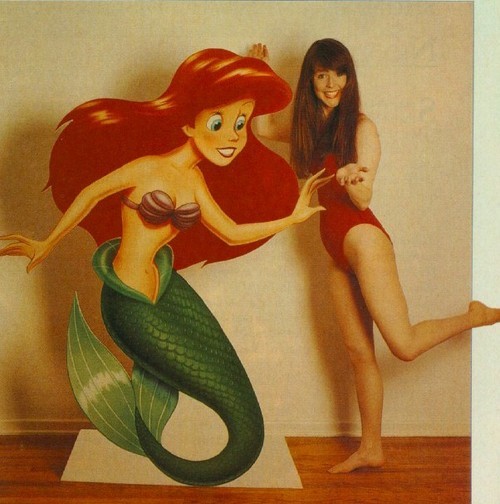
Like with The Black Cauldron, Disney put all of their eggs in this movie's basket. But The Little Mermaid was different in that it followed the classic Disney formula. The main character Ariel was just begging to be a Disney princess, there was a prince to be won over, the villain Ursula was straight out of the Maleficent book of villainy, and the musical aspect was well taken care of with bright, catchy songs from Alan Menken. Musker and Clements also decided to abandon Disney's newer, dirtier art form. Their designs were clean and bouncy, very reminiscent of early Disney films like Snow White. The filmmakers really took their job seriously, especially in regards to the main character of Ariel. In order to make her believable, the animators decided to hire a real actress, have her read Ariel's lines and act them out as if she was in a stage play, and animated Ariel based on how the actress performed her. Sherri Stoner, who would eventually become a writer and voice actress on The Animaniacs, was hired to perform Ariel's movements in a practice that almost could be comparable to modern day motion capture.
While Stoner was hugely important to Ariel's creation, she was not the voice of Ariel. Broadway actress Jodi Benson was cast as the lead. As far as voice cast goes, this movie did not attract any real superstars. Most of the roles were given to veteran actors and professional voice actors. This would change in future years as Disney films (And animated films in general) would become a popular place for big stars to lend their talents.
Menken and his team took their jobs seriously as well. The musical had been used so well in Disney's past. "When You Wish Upon A Star" is forever linked with Pinocchio, "Heigh Ho"is always recognizable alongside Snow White, "Chim Chimney" is Mary Poppins's signature song, and Peter Pan's "Following The Leader" is a classic. In response to the animation team's decision to base their designs off of classic Disney, they made their songs bouncy, fun, dramatic and extremely catchy; just like classic Disney. These songs were clearly designed to appeal to both children and adults, which had always been the vision Walt Disney carried out for his company. He always dreamed that The Walt Disney Company would be just as appealing to adults as it would for their children. One need only listen to "Under The Sea" from this movie to hear the energy put into it. You can practically hear a new era being carved out for Disney.
The Little Mermaid was released on November 14th, 1989, and its difference was immediate. The critical reaction was overwhelmingly positive, garnering Disney their best reviews in decades. Even more important, the box office intake was great. It grossed over $84 million in North America alone. With a $40 million budget, this netted Disney an excellent profit. With more money coming in from around the world, The Little Mermaid proved to be Disney's first big success in recent memory.
Aside from being a financial moneymaker for Disney, arguably the biggest gain from The Little Mermaid was that it was simply refreshing. The animators had finally made a movie that everyone hopes to make when you sign on to work at Disney. Everything about this movie just spelled "classic," and Disney saw that they had to look backwards in order to look forwards, and honour their legacy. The Disney Renaissance was finally underway.
For an encore, it would have made sense for Disney to make another fairy tale movie following The Little Mermaid's success. However, Disney already had a movie in production, and it was not a fairy tale: The Rescuers Down Under. It was a sequel to the 1977 movie and was released in 1990, the year after The Little Mermaid.
This movie, while generally well liked, is not really regarded as a part of the Disney Renaissance, and so it will receive minimal attention here. One thing it did bring to the table is the Computer Animation Production System, or CAPS. This was developed for Disney by Pixar Animation Studios as an alternate to cel painting as a way of colouring animated movies. With CAPS, now the colouring process could be done in a computer. The system was used minimally on The Little Mermaid, but The Rescuers Down Under was made entirely with CAPS, as has every subsequent hand drawn animated feature by Disney. The Rescuers Down Under was a modest success, but Disney did have another fairy tale in the pipeline, and no one could have predicted how big this next movie would be.
As mentioned previously, Walt Disney had considered doing an adaptation of The Little Mermaid back in the early days in the company, even though the movie was never made during his lifetime. For their next movie, Disney looked at some other shelved movies from this era and saw one that seemed perfect: Beauty And The Beast. At first, production on this movie was hard. Katzenberg was unhappy with much of the work that was going on, and the movie changed directors several times. The animators had a compressed schedule on which to work on Beauty And The Beast, which often spells disaster for a film. To make it worse, directors Gary Trousdale and Kirk Wise decided that the movie would make use of Computer Generated Imagery or CGI, which was a new thing at the time. This was before Terminator 2 and Jurassic Park changed the face of CGI, and it was still something to fear. Nevertheless, the use of CGI was notable in the dance scene, which would become a trademark of the movie. When the crew finally had the technical aspects nailed down, the movie was scheduled for release on November 22nd, 1991.
The reaction was immediate. In North America alone the movie grossed $145 million, making it Disney's most successful animated film ever at the time, as well as the first animated film to surpass $100 million. If The Little Mermaid had been a big hit for the studio, then Beauty And The Beast was the gigantic monster hit it so badly needed in the past few decades. The critical reaction was immediate as well. Animated movies generally did not do well at awards season. They are often seen as merely "kids stuff," and not worthy of serious consideration for awards, save perhaps in the music and technical categories. Beauty And The Beast changed that. Not only was it nominated for the Golden Globe for Best Picture: Musical or Comedy, it actually managed to win the award, beating out City Slickers and The Commitments. This was the first animated film to do so, and it would not be Disney's last. More importantly, Beauty And The Beast was nominated for Best Picture at the Academy Awards, something that was unthinkable for a so called "cartoon." It did not win, but the fact it was even nominated was a big moment for animation in general. It proved to animation studios that award bodies are paying attention to what they release, and will nominated animated movies, provided they are exceptional. To date, only two animated movies have been nominated for Best Picture since Beauty And The Beast: Up was nominated in 2010, and Toy Story 3 was nominated in 2011, making Beauty And The Beast the only non Pixar movie to receive a nomination.
The love for Beauty And The Beast continues to this day, with it topping many lists for best Disney film of all time. The aforementioned dance scene is a classic now, arguably one of the most famous scenes in movie history.
Everything from the music to the animation has been fondly remembered. The long tilt from the top of the room to the floor as Belle and the Beast dance is perhaps the most famous shot in the entire movie. The character of Belle is also unique, and quite unusual for a Disney princess. She has no interest in the handsome Gaston and no interest in castles or riches. She simply wants adventure and wants to see the world. The movie honours the Disney formula by having songs, romance, a villain, a princess (of sorts) and action, but it puts the formula on its head. In a normal Disney movie the Beast would have taken Belle hostage, Gaston would rescue her, kill the beast and the two would live happily ever after. Here, Belle and the Beast fall in love while she is in the castle. Gaston does indeed come to rescue her, but she puts up a fight in an attempt to stay with the Beast. She doesn't cry when Gaston dies, but weeps when the Beast appears to die. Everything is turned on its head, but manages to honour the classic Disney formula enough to make it seem fresh yet classic.
it should be noted that around this time, Disney had put the wheels in motion for a movie that would change cinema forever. In 1979, George Lucas started a computer division at Lucasfilm, a chunk of which was made up of a faction called The Graphics Group. The group proved to be very successful in developing early CGI animations, with a team headed by New York Institute of Technology professor Ed Catmull. The group began to grow, and it had caught the attention of Apple Computers founder Steve Jobs. At this time, Jobs had left Apple and was working on other projects. He saw the potential of The Graphics Group and purchased it from Lucasfilm, with the intention of making it into its own studio. The company changed its name to Pixar in 1986. The company was known to Disney through its development of the CAPS program for animation, and also through the employment of John Lasseter. Lasseter was a former Disney employee, who came to work for Pixar. Disney had always regretted his departure and had long desired him to return, to no avail. Pixar believed they would be able to produce a feature length animated film, which intrigued Katzenberg. He entered into negotiations with Pixar to distribute such a film. Eventually they came to an agreement for Pixar to make the film, which would be directed and co-written by Lasseter and executive produced by Jobs. It was called Toy Story, and it was destined for release in 1995.
With the overwhelmingly positive reaction to Beauty And The Beast, Disney was now officially on a role, and the world was anticipating their next movie. Their next movie had been in production since the very late 1980's: an adaptation of the Middle Eastern folk story Aladdin. The Little Mermaid directors John Musker and Ron Clements returned to direct Aladdin, and Katzenberg hired Ted Elliot and Terry Rossio to write the film. The duo would later go on to write the highly successful Pirates of the Caribbean and National Treasure franchises for Disney. The movie was set for release on November 25th, 1992.
Up until now, the Disney Renaissance films had attracted only veteran actors and professional voice actors for their voice casts. Now that Disney was high profile again, stars were starting to look towards Disney animated movies. Robin Williams signed on to play the Genie in Aladdin, and absolutely made the character his own. The character was full of pop culture references and comedy, clearly the most marketable character in the movie.
However, Williams did not want to be marketed at all. Williams took a pay cut to appear in Aladdin, provided Disney did not use his character to be one of the main advertising factors, and would not use his character to advertise products. Disney openly violated this part of Williams' contract and used his image everywhere. One need only look at some of the other poster released for the movie to see how much the Genie was at the forefront.
Williams was furious over this. "The one thing I said I will do is the voice," he said. "I'm doing it basically because I want to be part of this animation tradition. I want something for my children. One deal is, I just don't want to sell anything -- as in Burger King, as in toys, as in stuff....We had a deal." It was speculated at the time that Williams would never work for Disney again, and the studio ended up giving him a public apology. It took a few years but the two parties would eventually make amends, and Williams even voiced the Genie in a direct to video sequel to Aladdin released a few years later.
Regardless of the difficulties with Williams, production on Aladdin continued. Alan Menken returned to score the film and create new songs. While many of the songs in Aladdin are still beloved, there is certainly one song of note: "A Whole New World," the song sung by Aladdin and Jasmine as they fly on the magic carpet.
The song was sung by Brad Caleb Kane and Lea Salonga as Aladdin and Jasmine respectively, and the song won the Academy Award for Best Original Song at the 1993 Academy Awards. The song also was a huge hit on the pop charts, reaching number 1 on the Billboard Hot 100, a huge achievement. The soundtrack also won the Oscar for Best Original Soundtrack, winning Menken his fifth Oscar out of his current total of eight.
As has been the trend for the Disney Renaissance, Aladdin was a huge hit. It was released on November 25, 1992, causing a huge impact.As mentioned before, Aladdin won two Academy Awards, and was nominated for three others. It also picked up three Golden Globes (Including a Special Award for Williams) and was nominated for three others, including Best Picture: Musical or Comedy, although it failed to win this, unlike Beauty And The Beast. Aladdin grossed over $500 million, which was a record at the time for an animated movie. Critical reviews were very positive, and the huge marketing campaign turned Aladdin into an international phenomenon. The villain of Jafar has become famous in the years since, and has gone down in history as one of the great Disney villains. This would be the last Disney animated movie for the next two years as Disney prepared its next animated movie. Up until now, all Disney animated movies had been based on a book, fairy tale or story, albeit some being based rather loosely. For their next movie, Disney decided they would make their first ever original animated movie, and it was set for release in 1994.
For many years, Disney had been interested in developing a movie about Africa, and specifically a movie about lions. The movie would eventually come to be known as The Lion King, conceived as a coming of age story for a young lion cub named Simba. As the story was written and rewritten, the plot ended up being loosely inspired by William Shakespeare's Hamlet. Key plot points include Cladius (Scar) killing his brother Old Hamlet (Mufasa) in order to become king, with Hamlet (Simba) eventually killing him. Timon and Pumbaa's characters may not exactly match Rosencrantz and Guildenstern, but they do serve as somewhat comical friends to Simba. For Katzenberg, this was something of a passion project. He worked hard on developing this movie, and pushed the creative staff hard. Even so, the film was considered a risk. Katzenberg has been quoted as saying he believed that The Lion King would struggle at the box office, while the other upcoming Disney film, Pocahontas would be a smash hit and recoup The Lion King's losses. (We will discuss Pocahontas later) Production included a trip to Kenya for the staff in order to understand the environment that they were dealing with. The movie was directed by Rob Minkoff and Roger Allers, both of whom were directing their first feature length movies (Allers had been head of story for Beauty And The Beast and Minkoff had directed a Roger Rabbit short) They conceived an epic film, with a larger scale than previous Disney movies. The cast was also large. Matthew Broderick (Who seems to keep appearing in Lecture Hall installments....) was cast as adult Simba while Jonathan Taylor Thomas, who starred in Disney's hit sitcom at the time Home Improvement, was cast as young Simba. James Earl Jones, famous for providing the voice of Darth Vader in the Star Wars trilogy was back behind the voiceover microphone to play Mufasa. Zazu the hornbill was played by Mr. Bean star Rowan Atkinson. Whoopi Goldberg, Jim Cummings and Cheech Marin played the hyena trio, while the evil Scar was played by Jeremy Irons.
Production continued on The Lion King with the team steaming ahead to its 1994 release date. While this happened, a terrible tragedy occurred that ultimately ended up costing Disney two people of immense importance. Frank Wells was the president of The Walt Disney Company, a position he had held since 1984. This position made him the second in command at Disney, answering only to Disney CEO Michael Eisner. Wells was killed on April 3rd, 1994 in a helicopter accident at the age of 62. Following Wells's death, the position of president was vacant, and Katzenberg decided he was the best suited for the job and lobbied hard for the promotion. Much of what occurred during this time is still speculation, but ultimately Eisner refused to give the promotion, and instead hired Creative Artists Agency founder Michael Ovitz for the job. Furious, Katzenberg resigned from Disney, although he has later claimed that he was fired. Regardless of what happened the fact remained that Jeffrey Katzenberg, arguably the most influential person in starting the Disney Renaissance was no longer a member of the company. The amount of importance Katzenberg brought to Disney cannot be measured. He was the one who pushed for more quality for Disney, he was the one who brokered the distribution deal with Pixar, he was the one who had overseen every good decision Disney had made. It was under Katzenberg that Disney released its classic library of films onto VHS, under Katzenberg that future classics were made. Katzenberg was a visionary for Disney, and now he was gone. Eisner announced that Disney would likely make fewer animated movies. Some argue that the Disney Renaissance ended the moment Katzenberg left. However, this article will continue, especially seeing as the majority of people believe the Disney Renaissance did not end until the end of the decade. Regardless, the fact remained Katzenberg was gone and, this would hurt the company in ways that arguably lasts up to this day.
During this time period, Disney was more or less peerless in the animation game. Warner Brothers and other studios continued to release movies, but none were anywhere near as popular as the Disney movies. Now that Katzenberg was no longer associated with Disney, he began to explore job openings around Hollywood. He received an offer from Microsoft to begin a movie studio for the computer giant, but he ultimately turned this down. Instead, Katzenberg called two friends: music mogul David Geffen and, most significantly, legendary filmmaker Steven Speilberg. The three formed a new movie studio, the first major Hollywood studio to be founded in decades: DreamWorks SKG (SKG standing for Speilberg, Katzenberg, Geffen) Almost immediately, Katzenberg founded DreamWorks Animation, which he personally headed up. The live action portion was lead by Speilberg, and he remains involved with DreamWorks today. We will keep tabs on DreamWorks Animation, as they would contribute some interesting parts of Disney's future.
20th Century Fox chairman Joe Roth was hired to oversee Disney's animation department, although it would be a while before he could enter his own movies into production: after all, The Lion King was deep in development and several months away from release. This was the first movie in the Disney Renaissance to not feature music from Alan Menken. The score was composed by Hans Zimmer, with songs by Tim Rice and music legend Sir Elton John. The song "Can You Feel The Love Tonight," was sung in the movie as a love song between Simba and Nala, and was also recorded by John and sung over the credits. The Elton John version, like "A Whole New World" before it, was a massive hit, reaching number 4 on the Billboard Hot 100. "Can You Feel The Love Tonight" was also sung by John and made it onto number 18 on Billboard. "Hakuta Matata" was not a big hit, but was still well known at the time. An interesting note comes with the song "Be Prepared," which basically functions as Scar's villain song for the movie. For the first bit of the song, Jeremy Irons did his own singing. However, part way through recording, Irons's voice apparently gave out and the rest of the song was turned over to legendary voice actor Jim Cummings, who was already voicing one of the hyenas. Cummings' rendition was so exact to the way Irons sang the song that virtually no one can detect that there are two separate singers.
With all of the behind the scenes drama over, The Lion King was released on June 15, 1994, and the post Katzenberg era was officially underway at Disney. With the Disney Renaissance so well underway, many expected The Lion King to be a hit, but no one could possibly have known how huge this movie would be. It ultimately ended up being the second highest grossing movie of 1994, losing only to Forrest Gump. This meant The Lion King outgrossed other huge hits from that year such as Speed, The Santa Clause, True Lies, The Mask and Pulp Fiction, among others. To date, The Lion King is just shy of a billion dollars, a feat unheard of for animation at the time. It took Aladdin's spot as the highest grossing animated movie of all time, and it would keep its crown for 16 years until Toy Story 3 beat it in 2010. The critical reaction was also huge, with the movie winning international acclaim. The movie won Oscars for Best Original Score and Best Original Song ("Can You Feel The Love Tonight"). It was also a hit at the Golden Globes, winning the exact same awards there as it did at the Oscars. This time however, it also brought home Best Picture: Musical or Comedy, the animated Disney movie to do this since Beauty And The Beast. The movie spawned video games, promotions with Burger King and other companies, toys, t-shirts and virtually everything else needed to make it so that The Lion King was everywhere in 1994, making it a full blown pop culture phenomenon.
This was without a doubt the peak of The Disney Renaissance, possibly the peak for the company as a whole. This was just 11 years after The Black Cauldron bombed and Disney Animation was left for dead. Now they had consistently made hit after hit that proved just as popular with adults and critics as they did with children. It was one of the greatest comebacks in entertainment history, if not the greatest comeback. Even classic Disney had never managed a Best Picture nomination. Walt Disney had always said it was a dream to create things that made parents and children have fun together. This was a modern realization of it. The classic Disney movies were not being widely released on VHS, and the new classics were welcomed with open arms. Alas, all good things must come to an end. As mentioned before, The Lion King was the peak of The Disney Renaissance. After it, nothing would ever be the same, and not in a good way for Disney Animation.
This concludes Part I of the Disney Renaissance Lecture Hall. Stay tuned for the rest of the story.
So life has been keeping me busy for a while, and by that I mean a long while. So I'm going to do a recap on the movies I've missed.
The Hunger Games: Catching Fire
You may remember that I considered the first Hunger Games to be a very pleasant surprise, so I came into the next one pretty hyped, although the choice of Francis Lawrence as director had me skeptical. My skepticism was misplaced: the movie was great. The direction was awesome, the story was awesome, and the movie as a whole was awesome. Really impressed.
12 Years A Slave
Of course, the Oscars have come and gone, with 12 Years A Slave winning Best Picture. Did it deserve it? Oh yes, absolutely. Everything you've heard about this movie is true: it's incredibly powerful, deeply disturbing, and an overall emotional powerhouse of a film. The acting was absolutely stellar all around, although I really have to give extra props to Chiwetel Ejiofor and Michael Fassbender. Elijofor played the protagonist perfectly, while Fassbender played one of the most vile characters I've ever seen in a movie. I highly recommend this movie, it's one of the best movies in years.
American Hustle
A perfectly fine movie, from a the great David O. Russell. The cast is of course impeccable, and includes a very nice cameo from Robert De Niro. Everyone was good, but Christian Bale was absolutely the best actor in the movie. Not bad at all.
The Wolf Of Wall Street
Look, I get the controversy over this, but I'm not sure if I agree with it. It may seem like Jordan Belfort got away the stuff he did, but I disagree. He lost his family, which was super important to him, even if he didn't always act like it. He also lost his reputation and all credibility, which changes his life. I think this movie really requires a lot of thought, which is pretty deceptive behind all of the..... insanity that happens. Overall, a good movie.
Frozen
"Let it go, let it go!" Once again, believe the hype, Frozen was a wonderful movie, the best Disney movie in a very long time!
I'm a guy who usually has a lot to say, as my friends and family can attest. It takes a lot to shut me up. Did Gravity succeed is taking my breath away? Well it's funny: I can't think of a movie that I've ever had more to say about and less to say about at the same time.
Is Gravity good? It's mind blowing, damn near perfect. This has to be my favourite movie of the year, I can't imagine anything being better. When I say I don't have much to say, that's a good thing. I just don't have words to describe how great this was. I have no clue how a lot of this movie was shot, and that says a lot. I graduated from Television Broadcasting at a respectable college, read books on filmmaking, watched the behind the scenes features on virtually every DVD I know.... and yet the opening shot had me scratching my head. And by opening shot I mean the first 15 minutes or so. Yeah there's parts where you can see they managed to sneak different shots in there, but it's edited so well and so tightly that you can barely tell.
This was directed by Alfonso Cuaron, who is probably best known for his amazing direction on Harry Potter And The Prisoner of Azkaban, which is probably the most visually striking of all the Potter films, and arguably the best movie overall. He brings his masterful direction style here. This was a new age of filmmaking, with a different style than anything I've ever seen. Again, I don't know how to describe it, but see the movie and you'll know what I mean. The actors (And by that I mean two) were great. Sandra Bullock gave probably my favourite performance of hers in any movie. She was basically an everywoman, but she was given a pretty tragic backstory. Bullock pulled this off perfectly. You feel for her and cheer for her. It's an amazing performance. As for George Clooney, well.... George is George. Yeah, he's on the most likeable actors around, and he sells his performance on that completely. You really like this guy, which was basically his characters biggest function. Both performers were perfect for their roles.
I don't know what else to say. I've been very vague, and I'll acknowledge this isn't my best review, but I have no idea how to describe it. It's an amazing movie, and I highly recommend it.
Yeah been offline a while, mostly due to computer troubles. I haven't been able to go to theatre very often recently. I have seen Gravity, but I've been having a hard time writing a review for that movie. It's tough to find the words to express my feelings towards it. I just saw Thor: The Dark World yesterday, proving once again I can't seem to stay away from Marvel Studios movies. Now as some of you may know, I was was somewhat.... skeptical of Iron Man 3 (Actually, I completely hated it) This led to me distrusting Marvel, which is surprising considering how much I loved The Avengers. Marvel debuted a new TV show earlier this year, Agents Of SHIELD. I haven't spoken about it here, but I didn't like it at all. The fact I was watching some much superior televisions shows at the same time (Read: Breaking Bad) probably didn't help, but the fact remains that the characters or setup weren't remotely interesting. Sure it's awesome to see Agent Coulson alive and well, but the show has nothing else going for it. What I'm trying to say is that Marvel's stock is at an all time low to me, but I had high hopes for this one. I liked the first Thor a lot, I was sure this would get Marvel back on track. Did it? Well.....
......Not really, no. There's stuff to like here, more than there was in Iron Man 3, but that doesn't change the fact that Thor: The Dark World is an empty, bland movie. First I'll talk about the good. Once again, Chris Hemsworth completely owns Thor. He's a lot less arrogant and much more likeable, which was a good thing. Once again, Tom Hiddleston is magnificent as Loki. I guess I kind of forgot how much I loved Hiddleston in this role, and he didn't disappoint. He isn't in the movie as much as he was in The Avengers, but he does manage to steal the show when he is on screen, even from Hemsworth. I had kind of thought Loki's story was more or less over after The Avengers, but I was wrong. The development between the relationship between him and Thor are easily the best part here. Natalie Portman was fine I guess, although Darcy really annoyed me at times. Even so, she was good for a few laughs. As with most Marvel movies, the action scenes were good, although I didn't enjoy them nearly as much as previous ones. I liked the extended look at Asgard, it's a very well designed place.
Now what didn't work? In a word: the villain. The villain is Malekith the Accursed and the Dark Elves. The Dark Elves reminded me a lot of the Putties from Mighty Morphin Power Rangers. You know, these guys:
They were just henchmen, no real personality. Even so, they did look cool, and maybe even a little creepy. But Malekith? Wow did he suck. The look was okay, Christopher Eccleston was fine, but he was about as unthreatening as a villain could be. He wasn't threatening at all: He gets beaten easily several times throughout the movie, he's not a very good fighter, and he doesn't come off as particularly bright. He's less a villain and more an example on how no to write a villain. Outside of him, The movie is very bland, but it's hard to explain. I got bored a number of times, which is a bad sign considering the movie isn't longer than an average movie is these days. The story is isn't engaging or exciting, it almost feels like a story that really didn't need to be told. I loved the first one, and I was hyped to see a direct sequel. It didn't live up to expectations at all, which is too bad. Get your act together, Marvel!
I already did the Lecture Hall on this movie, but I tried my best to be as neutral as possible. Looking over it I realize some of my opinions crept in, but I did my best to keep my own feelings out of it. When I said that the movie wasn't faithful to the original Godzilla, that's not the angry ravings of some Godzilla fanboy, that's just simple fact. Look at the characteristics of the Japanese Godzilla and the American Godzilla, and there's no doubt there are huge differences. The appearances are different, the characteristics are different, the fighting styles are different, and the techniques are different. Am I a Godzilla fan? Yes. So from what I just said and from what little bits of opinion crept into the Lecture Hall, you must think I hate the movie. After all, a simple Google search will show that virtually every fan of the Japanese Godzilla movies seem to hate the American movie, so I must hate it as well, right?
Well.... yeah.....but.......c'mon. It's not THAT bad..... (Or is it?)
First of all yes, as a movie this totally falls on its face. How bad is the writing? Well, as soon as Dr. Nik Tato-whatever his name is (Y'know, Matthew Broderick's character) finds blood from Godzilla, the first thing he does is run to the pharmacy (Which is still open like everything's fine and there isn't a gigantic lizard on the lose) and buys human pregnancy tests. He tests them and poof! Godzilla's pregnant? Then he says he has to go to the lab to "confirm this." What did he even suspect that Godzilla was pregnant? Why not test it for radiation, compare it to the DNA of other reptiles to try to get some kind of clues as to what Godzilla's identity could be? Why does his mind turn right away to pregnancy, especially since there's no proof at all there's another Godzilla out there? Oh that's right, Godzilla reproduces asexually. How convenient. Hey, how did you guess that so accurately? Sure there's no proof that there's another Godzilla, but does that mean you have to rule that possibility out entirely? And why do you keep referring to Godzilla as a "he"? If he lays eggs, asexually or not, then it must a be a female, right? Why do this movie not explain this? No idea. There are serious lapses in thinking. Granted, I don't know what I was expecting of a summer blockbuster from Dean Devlin and Roland Emmerich, but my God; Independence Day wasn't this stupid! But as bad as the writing is, the acting is even worse. Broderick was nothing short of dreadful, along with everyone else. Okay I guess Jean Reno was kinda fun, but that's it. And if they're French secret agents, why do they speak English half the time? Would having us read subtitles be that difficult?
But of course, this is a summer blockbuster, where acting and writing take a backseat to fun and special effects. Should that be the case? No, but I'm not here to take shit about the summer blockbuster season in general. Is Godzilla fun? Well... yeah it is. The CGI effects are actually pretty good, much better than some of the other CGI effects from the 90's (I'm looking at you, Spawn) The action scenes are fun, especially the chase sequences. True, Godzilla should be the one chasing the military and not vice versa, but they are still fun for what they are. The scenes where Godzilla first arrives in Manhattan are easily the best parts of the movie. It actually does a pretty good job of creating fear and tension in New York City, especially in terms of Godzilla's mystery. No one has obviously seen anything like this, and I think the fear over him is well done. I hated how the ending of course, but that goes without saying. I know the humans eventually killed Godzilla in the original Japanese movie, but it was done much better than this! Even so again, I can't say I was ever really bored during the action scenes, and that's a positive.
Is this a Godzilla movie? No way. The characteristics are different, the monster's personality is different, everything is different. It's more a remake of The Beast of 20,000 Fathoms, another movie that I like. I am a Godzilla fan, but I can't find myself getting too mad at it. It's a stupid movie, but entertaining enough to get a pass from me. It's a very, very guilty pleasure for me. Is it a good movie? No, but I'd say it's worth a watch, at least one.
Tad late on this one, but here are my reviews for every movie I saw this summer. I already reviewed a bunch of these, but not all. I didn't have the chance to see a lot of the movies this year, so don't expect reviews for Elysium or even Star Trek Into Darkness (I've actually never seen any of the Star Trek movies)
Iron Man 3
My most anticipated movie of the summer, and also the worst. I already wrote about how much I utterly hated this movie, so I won't go in too much further. I don't want to seem like I'm just piling on to those fanboys who are complaining about the Mandarin twist. My problem was that they threw out an interesting, compelling villain and replaced him with a less interesting villain whose powers and and abilities bordered on laughable at times. A poorly written mess that's shaken my faith in Marvel Studios. The new Thor movie had better deliver. 0 Stars
The Hangover Part III
I really haven't spoken about The Hangover movies before, so very quickly: I like the first one a lot. I think it's very funny. The second one is nowhere near as good, but still has a few moments that made me laugh, even if it is a carbon copy of the first one. This one continued the downward trend. It wasn't the "epic conclusion" promised, although it didn't need one. Does a movie series called "The Hangover" need an epic conclusion? This had maybe two scenes that made me chuckle, and nothing that really made me laugh. The story was bland, John Goodman was wasted, and I found this to be the least interesting of the three. Alan was never my favorite character, so seeing him be basically the sole focus annoyed me. Still, it was good to see the Wolfpack again, and I will miss the chemistry Ed Helms, Bradley Cooper, Justin Bartha (Yes, I do consider him part of the Wolfpack) and Zach Galifinakis have. That alone keeps me from totally hating this movie, even if it was a trainwreck. 1.5 Stars
The Lone Ranger
...Yup. This was the first movie I saw after two seeing two others that I hated. I didn't have a great summer at the movies is what I'm trying to say. To be fair, this was nowhere near as bad as the critics said. Is The Lone Ranger a bad movie? Oh yeah, for sure. But it's not terrible: the action scenes were very well done (For the most part), there are some funny parts and I actually thought the acting was good. Johnny Depp, Armie Hammer and Tom Wilkinson were all good, and I thought William Fichtner was very good. The William Tell Overture playing throughout was wonderful and made everything epic and fun. It was a huge boost to the movie. Was Depp's portrayal offensive as some people said? I don't know, maybe. It depends on the person really. The story was all over the place with plot holes aplenty. The movie was waaaaaaaaaaaay too long. The pacing was off throughout, several characters were totally wasted (Helena Bonham Carter comes to mind) and the story overall was weak. With a better script, they could have had something. What we're left at is a mildly entertaining night at the movies, but absolutely nothing beyond that, and certainly nothing memorable. 2 Stars
Man Of Steel
Already spoke about this garbage. Awful direction, awful script, good cast. Better than Iron Man 3, but only slightly. And no, I could not care less about the upcoming sequel with Batfleck. I honestly don't even know if I'll see it. 1 Star
Pacific Rim
I really tried to write a review for this, considering how hyped I was for it. Yes, it was giant robots fighting giant monsters. But it was a lot of fun, and respected its audience. It took itself seriously enough, which made it a welcome change from Michael Bay's Transformers. It wasn't perfect, but it was a good action movie and a fun ride. 3.5 Stars
Monsters University
Leave it to Pixar to save my summer movie journey! This wasn't perfect, and not really Pixar's best, but this was still an excellent movie. It was great to see Mike and Sully again after Monsters Inc, which I always loved. There was good comedy, a good story, and a surprisingly harsh message for children. It teaches that sometimes our dreams are unattainable, no matter how bad we want them. That may seem wrong, but it's a slice of life kids need to learn. I think it's important for us to remember that, and I appreciate the fact this movie reminded us of that. It's not a downer, but it is realistic in that sense. Realistic: a word I use to describe a movie about monsters. That my friends, is the magic of Pixar. 4 Stars.
The Wolverine
I'm not a huge X-Men fan, so it took me a while to see this. I enjoyed it. Hugh Jackman owns it as Wolverine, as always. Its great to see such a great actor starting to get the recognition he deserves. I'd say the first two thirds were really good and interesting, but the last third suffered, turning into a generic final battle. The addition of Jean Grey was brilliant in my opinion. It's probably the last time we'll see Jean in this series, and I thought she was used great. Some flaws, but a solid effort overall. 3 Stars
Some good movies here, but no gems really. This was a disappointing summer at the movies for me, and I hope next year is better.
When you tell people you love horror movies, chances are you're going to get one of three responses:
1)Apathy. ex: "Cool, yeah. You watch the game last night?
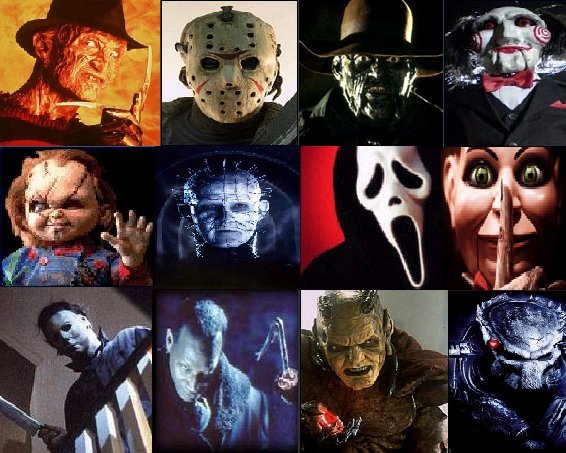
2) Agreement. ex. "Hell yeah man, Chucky and Leatherface rock! What'd you think of the Nightmare on Elm Street remake?"
3) Disgust. ex: "How can you watch that stuff? It's all about death and blood!
Yeah, let's be honest: that third one is probably the most common response. Sure, everyone has seen The Exorcist, Silence of the Lambs and Alien, but horror as a genre seems to be very niche. I also find that people who enjoy horror movies seem to be judged at times. Bear in mind that the town of Santa Rosa, California refused to let Wes Craven film the first Scream movie in one of their high schools simply because they believed that horror movies were unethical. Even today there are many people against the genre. Why is that? Well, it really is pretty simple. For the most part, horror movies are about people getting murdered. There is also the idea of paying money to be scared that turns people off. Many people prefer to go the movies to escape the horrors of real life. If you go to the movies to escape, why pay to see a movie about a masked madman who kills teenagers? That almost sounds like a real newspaper headline you would shudder over while eating breakfast. Well, here's the thing folks: I love horror movies. React to any of the above responses. I'm here to talk about horror movies, and you're going to sit here and enjoy it. Yes, YOU.
So, the first question: why do I like horror movies? I honestly don't know. I've always felt that people are naturally drawn to things that frighten them. We're all morbidly curious about just what frightens us. For example, I think a number of people are afraid of nightmares. They seem realistic, are down right terrifying and they're unpreventable. You could have the most horrible nightmare tonight and you can't do a damn thing about it. A Nightmare On Elm Street channels this fear and makes it interesting. What if what happens in a nightmare was real? What if a death in a nightmare meant a death in real life? That's the appeal. It's an exaggeration of real life that makes us relate to them and want to watch them. Granted, that does not apply to all horror movies. Alien comes to mind. I don't know about you, but I've never been in a spaceship lightyears from Earth where a vicious alien creature is picking off my crew one by one. Well, Alien has a different appeal in how it is presented and what it represents. One of the great things about that movie is the questions raised. Not everything is answered, no matter how much we want answers (Thanks for nothing Prometheus). The suspense in this movie is insane. The music if foreboding, the lighting dark and moody, the editing tight and menacing. There is simply no room to breathe when the alien creatures gets on board the ship. But Alien goes even beyond that. There is no other way to describe it: Alien is a very sexual movie. The alien itself is meant to be a representation of rape. The facehugging and chestbursting scene are symbolic of the stages (the actual assault and childbirth) while the creature symbolizes the horrendous aftermath and the pain that sexual assault brings. This is hardly very well covered up in the movie. Director Ridley Scott has admitted the sexual overtones in this movie, and I think he was successful in making it clear to the audience what the movie was really about. I think that these overtones really lead to the overall discomfort one gets from watching Alien. That's another appeal of horror movies: creativity. They took something as horrendous as rape and turned it into a movie monster that we can truly hate both for its actions and what it represents. I repeat, horror movie villains are characters we LOVE to hate. People cheer when Jason Voorhees meets his end in one of the endless Friday the 13th sequels, and cheer again when he comes back in the next sequel with no explanation. Watch Friday the 13th Part VII: The New Blood and watch as Jason gets attacked by Tina and her telekinesis. You can't help but laugh and cheer because you want to see Jason get what he deserves.
There's another thing that appeals to me as a horror fan: it's fun being scared. Yeah, sounds weird, but it really is kind of fun being scared by a movie. I don't know why that is: it's just a different kind of experience. It's almost like an act of rebellion. You know you shouldn't be going to a movie to be scared, but there's just something about that appeals to you. You have your hands on your face about to cover your eyes, but you just can't. I'll give an example, I watched The Collector recently, a pretty terrifying movie. There were so many times when I thought of just shutting it off and forgetting about it, but I simply couldn't do it. I just had to know what happened next and how far the filmmakers would go with the subject matter. And by the way, they went pretty damn far. There's a sense of accomplishment that comes with getting through a movie like that, something that almost brings bragging rights. When the first Paranormal Activity movie came out, I remember a lot of people bragging that they had it made it through the whole thing without leaving. Some of these movies are so crazy, so scary and so intense that it's almost a marathon to make it through them. Have you ever seen the original Halloween on Halloween? I have, and it's terrifying. I was amazed that I got through that, but it gave the movie a whole new atmosphere.
I know not everyone will not like horror movies, but I can't help but love them. I think people should give this genre a chance. I prefer the older horror movies to the newer ones. A lot of them are torture porn splatter flicks, but that's not to say there aren't a lot of good horror movies made today. Supernatural horror is very popular right now, buoyed by the Paranormal Activity series. Give horror movies a chance, and really try and enjoy them. It's worth a shot.
I was looking over my blog recently and came to a shocking realization; I forgot to review this movie! I had written the "Tale Of Dark Stuff" post with the intention for it to lead into a Man Of Steel review, like how the Incredibles post lead into Iron Man 3. But it just never happened; I guess I'm either super lazy, or this movie didn't leave anywhere near enough of an impact to make me remember to review it. Or it could be both. Yeah, both.
I guess you can't talk about this movie without at least mentioning Superman Returns, the last movie Superman movie to be released, back in 2006.
I won't talk too much except this; it's not that bad. Sure it had it's flaws, but the movie was nowhere near terrible. The biggest problem a lot of people seemed to have with it (Besides Lois having no clue the damn kid was Superman's kid) was that film really didn't have a lot of action. Hell, Superman never even threw a punch! Superman Returns didn't do that great, and future Superman movies seemed to be in limbo. The fans made it clear they wanted less character development and more action. A number of ideas and pitches were thrown around until finally Warner Brothers decided they would produce a Superman script by David S. Goyer. And oh look, Christopher Nolan was exec producing! Yay! What could possibly go wrong? Hmph.
Let me be start by saying I was really looking forward to this. The early buzz was great, the cast was promising, the trailers looked stellar, and I had an overall feeling we finally had an awesome, badass Superman movie. Nope. The biggest problem with Man Of Steel is that the movie is utterly joyless, with zero sense of fun or adventure. They were really trying to make this Superman's answer to Batman Begins, very dark and serious. I appreciate that, but it just doesn't work well for Superman. I don't mind them taking it seriously, but Superman needs to have some form of optimism. Superman is meant to symbolize hope, but this guy just represented a dark brooding guy who hates his life and saves people because his daddy tells him to. And for a movie that tries so hard to pose itself as a serious alien invasion movie, why do the Kryptonian "aliens" look, talk and act exactly like humans? I know it's also been that way in the comics, but it bothered me there too. Here was the chance to explain it; maybe a throwaway line on how humans and Kryptonians have a similar DNA to finally clear that up, especially in a movie trying to be "realistic." Another thing: Superman is supposed to be full of compassion and love for humans, right? That's why he saves people? Well in this version, he shows none of that. The final battle probably killed tens of thousands of people, but Superman never goes out of his way to save people. That's one of the problems I have with these big budget destruction movies. Hundreds of people are probably dying, but just so long as our small group of main characters (In this case Perry White, Lois Lane and the Daily Planet staff) survive, everything is gonna be okay. Sure they may be the last people alive, but so what? We need to have our happy ending somehow.
This was pure style over substance, typical of director Zach Snyder. We asked for more action, and oh boy we got it. But then we got the opposite problem. There was very little character development and WAAAAAAAAAAAAAAAAYYYYYY too much action. It got really boring after awhile. Like Superman Returns, this movie simply cannot mix action and character development, although I think this was even worse. Sure Superman Returns had little action, but scenes like the plane rescue scene made it up for it. This movie had no real character development. We see Clark can't stop from saving people, but why? Why does he care? We see some of it built up, especially in the scenes with Jonathan Kent, but it's simply not enough.
Did I hate everything about this movie? No. The action was way overdone, but that's not to say there weren't some very impressive scenes, like the midair battle between Superman and Zod. The best part of this movie was easily the cast. The only main cast member I didn't like was Michael Shannon as Zod. He was too warlike, I didn't buy him as a general. The rest of the cast was great, although Amy Adams stole the show as Lois Lane. Without a doubt, this was the best incarnation of Lois ever. She was tough, resourceful and very, very smart. She's actually an investigative reporter, and manages to track down Clark and learn about his past. A HUGE improvement over Kate Bosworth's Lois. Henry Cavill was good as Superman, he really was. He carried the burden of his powers well and put a human face on Superman's struggles. An already weak movie would have suffered a lot more if he wasn't in it. Kevin Costner was really good as Jonathan Kent. He was warm and wise, and the scene with the tornado was very powerful. Russell Crowe was okay as Jor-El. He got the job done, but he was a bit dull.
It's too bad Man Of Steel is disappointing, because I really think they could have had something. I'm all for a more serious Superman movie, and I'm all for an action packed Superman movie. I just wish the filmmakers knew how to balance everything better. I know Goyer and Snyder are returning for a sequel, a sequel that will feature Batman. I do want a sequel to this instead of another reboot. The cast was too good to let go, and I don't think this mess was unfixable. But it needs new creative people, and I think Snyder and Goyer should be replaced. Not much thought on Batman, but we'll see. Overall Man Of Steel is a weak, disappointing movie, but not terrible, right? Nah, not terrible at all...
-
-
-
-
-
-....Ok, you know what I'm going to say. There was one scene that pushed this movie over the edge, one scene that did push this movie into terrible territory, you know what it is. Zod is about to hit some people with his heat vision while Superman begs him not to. Zod is about hit them.... when Superman snaps his neck, killing him. Look, I get that they're trying to make a more "modern" Superman, but there's some things you can't change. Superman never, ever kills. This is an aspect of the character you can't change, and this movie had no right to try. What's worse is that it was avoidable. If they put Superman in a position where I really believed he had absolutely no choice but to kill Zod, then maybe I would have bought it. But they didn't even do that properly! He could have covered Zod's eyes, thrown him through the wall, punched him in the head, anything other than kill him! It was a rushed and frankly unforgiveable moment that totally sank this mess once and for all.
We're going to be doing something a little different today. This is the start of a (maybe) ongoing series on this blog called Lecture Hall. The title says it all: I will be doing a lecture of sorts on any given topic. This means I'll be covering the history of it, its effect and what it is today. That means it'll be longer than most of my other posts. I've always been good at retaining facts and giving sort of lectures (I'm told I drive people crazy), so I'm going to take a shot at writing them down. I may get some facts wrong here there, but I will do my absolute best to be 100% accurate. With all that said, here is the first entry in Lecture Hall: Godzilla 1998!
Every summer, every Hollywood studio releases what are called "tentpole films." These are meant to be giant movies with huge marketing campaigns, huge merchandising and toy sales, and finally huge box office returns. Basically, whenever a studio really wants to make an impact and make some serious money, they release a tentpole. Every studio has their "signature" tentpoles however, the ones who have made the most money and left the biggest impacts. Paramount has the Transformers series and Mission Impossible, Warner Brothers has Harry Potter and The Dark Knight series, Disney has virtually all of their animated films plus the Pirates of the Caribbean movies, while Sony has Spider-Man as their biggest tentpole. However, Spider-Man is not the first time Sony has tried to take a famous, pre-existing entity and turn it into box office gold. This other franchise already had a series of movies to its name, although none were made in America. This was a Japanese series of films, a series that Sony planned to bring to America and make into one their signature franchises. How wrong they were.
Godzilla was a huge Japanese franchise which started with the 1954 film Gojira. The movie featured a giant monster known as Gojira attacking Japan, before finally being destroyed by humanity. The concept may sound silly by today's standard and the special effects may seem outdated, but Gojira had a lot under the surface.
Gojira was a sleeping sea monster that was brought back to life by the Atom Bomb which hit Japan during World War II. The bomb mutated the monster, and gave it new abilities. Tone wise, the film is not campy at all. It is very dark, very gritty and very serious. Gojira's attack is treated like any other disaster be it a hurricane, a tornado, or, most importantly, an atom bomb. The monster is in fact an allegory for the atom bomb, and the devastation Gojira brings to Japan is an allegory for the destruction Japan suffered following the bomb. This movie was later translated into English, and a new American character was added; Steve Martin (not to be confused with the comedian), played by Raymond Burr. The title of that Americanized version, however, was changed to Godzilla: King Of The Monsters. A new monster franchise was born.
A great number of sequels were made, sequels which often deviated from the first movie's dark tone. Godzilla fought aliens, robots, and even fought a giant sized King Kong in King Kong vs Godzilla. These films were all made in Japan by Toho Studios. Throughout the course of these films, a number of "rules" were applied to the way Godzilla looks, fights and acts. Some of these "rules" are:
-Godzilla is meant to be an upright monster similar in appearance to a Tyrannosaurs Rex with fins on its back which resemble a Stegosaurus.
-He is often believed to be a male.
-He has radioactive breath which he uses as a great weapon. His fins glow blue when he breathes this.
-Godzilla is always unhurt by ordinary human bullets, tanks, missiles and any other conventional weaponry.
-When attacked by the military, Godzilla always fights back.
These are generally thought to be Godzilla's trademarks from the Japanese films. While these films were made in Japan, many of them were translated into English and released in American theatres. As a result, Godzilla built up a large fan base in America and soon became a household name.
Godzilla as he appeared in the early 1990's
Sensing that an American remake of Godzilla could be a huge moneymaker, Sony Pictures negotiated with Toho for the rights to make an American Godzilla film in 1994. They were ultimately successful, with Toho excited about the prospects of Godzilla officially going to Hollywood. Sony decided their version would be very faithful to the original Godzilla films. They hired Ted Elliot and Terry Rossio, fresh off of Aladdin to write the film and selected Speed director Jan DeBont to direct the film. A teaser trailer was made to gain early hype for the film even before any actors came on board or any cameras rolled.
DeBont and company slaved to create a faithful adaptation, which would feature Godzilla fighting a bat like monster named the Gryphon and featuring a final battle in San Francisco. Audiences began to get hyped.... and then the movie fell apart. DeBont's spending began to get out of control, withSony growing furious with the escalating price tag. The studio began to crack down on spending which infuriated the director. DeBont complained that he would not be able to make the film with those cost restrictions and soon departed the project. In the years since, images of have leaked out which show how Godzilla would have looked: it appeared to be very faithful to the original look.
The studio decided to start from scratch and rejected the screenplay written by Elliott and Rossio. Sony went on the hunt for a new group of filmmakers to the project, and found them in the form of Dean Devlin and Roland Emmerich. They had come off of Stargate, and were about to release Independence Day, a future box office juggernaut which would cement Will Smith as a superstar. Their style of filmmaking could be summed up in one word: destruction. Lots and lots of explosions, destroyed buildings, gunfire and huge special effects. To Sony, this seemed like a perfect combination and hired them. The pair would write the film, Devlin would produce and Emmerich would direct. However, cracks were forming already. Both Devlin and Emmerich openly admitted they were not fans of the original Japanese films, and both decided to start fresh on the monster. "My whole concept was based on totally changing Godzilla," said Emmerich in regards to the film. Devlin also did little to calm the fans, by saying that the older Godzilla films did not properly represent the character. "Only now are we able to present Godzilla in the way I think the original authors intended him to be which is lethal, and fast, and agile, with a few new tricks up his sleeve." Devlin also called out the special effects of the old films, referring to the man in a suit effects as nothing more than "a lumbering Frankenstein." These comments, combined with their reported demand to Sony to do the picture "their way" led to some early fears that the film would ignore the source material.
Godzilla was set to be released on Memorial Day 1998. Devlin and Emmerich completed the script and casting began. Matthew Broderick was cast as Dr. Nik Tatopoulous (His difficult to pronounce name is the subject of a running gag in the film), Jean Reno as French Agent Phillipe Roache, Maria Pitillo as Audrey, Nik's lover and Hank Azaria as TV cameraman Victor 'Animal' Palotti. As filming got underway, Sony wrapped the production in huge secrecy, with the design of the monster being an extremely well kept secret. They teased that Godzilla would have a huge makeover, but stated that viewers needed to see the movie to see what he looked like. In fact, Godzilla's design wound up being the most important part of the advertising campaign. Allegedly leaked concept drawings of Godzilla wound up on the Internet in the Fall of 1997. Sony and Centropolis (Roland Emmerich's production company) stated the drawings were fakes that were supposedly made to throw anyone who believed they found Godzilla's design off the trail, and that they in fact had no relation at all to the real design of Godzilla (Although those drawings were allegedly very close to the final look) The marketing campaign soon took over the airwaves and billboard across the world. The goal was to reveal certain parts of the monster in teaser trailers and early marketing material, such as his foot or his eye.
For a long while, these parts of Godzilla were all that was released. Any product or TV spot featuring the whole monster could not be released until after the movie was released. They also created many sponsorships with companies, such as Taco Bell and KFC.
In a way, this represented Toho's dream. Godzilla was now showing up in America, and being advertised with American companies. It seemed like a new beginning for the beast. Finally, Sony essentially took over the world with the last kick of their marketing campaign: posters for the movie which advertised Godzilla's size, and carried the now infamous tagline: Size Does Matter.
(Note: These pictures are courtesy of Barry's Temple Of Godzilla)
Production of the movie was a nightmare. The crew struggled very hard to make their Memorial Day release date and were forced to rush shooting; never a good thing for any movie. "We were so determined to make this date that we built a schedule where we couldn't screen test, and we should have. I think we really could have improved the film," Dean Devlin said later. "We literally finished the cut and went to the printer." Sony saw what was happening and offered to push the release date back, offering the crew more time to make the movie. Devlin and Emmerich felt honour bound to the Memorial Day release and decline; much to their chagrin. "It was foolish (To decline more time)," Devlin admitted in hindsight. This rushed production meant that Emmerich had less chance to direct his actors, meaning the performances and characters became afterthoughts. Summer blockbusters are almost never known for good acting, but Emmerich had been able to extract a good performance from Will Smith in Independence Day. That was not the case here, and a lot of attention was made in making the monster look good. Originally the plan was to create Godzilla through a combination of animatronics and CGI. This was realized, but the bulk of the work was CGI, a counter from the Japanese movies which always used an actor in a rubber suit.
At long last, the movie hit theatres. The reaction was not at all what Sony had hoped. Fan reaction was very, very negative. As stated above, there are a number of 'rules' regarding to Godzilla that fans take to heart. It upset them that very few were followed. Godzilla did indeed have the fins on his back and sort of resembled a Tyrannosaurs, but that was not the largest influence. Rather than being a sleeping dinosaur, Godzilla was a marine iguana that was made into a monster by nuclear testing in the French Polynesia. Godzilla's back fins and classic roar were kept, but it was widely speculated that Toho demanded these be kept and it is possible that Devlin and Emmerich would have gotten rid of these if they got the chance. Godzilla's nuclear breath was totally scrapped, and instead appeared to breathe a flammable gas that at one point caused some cars to ignite in flames. A large portion of the plot involved Godzilla reproducing asexually and giving birth to dozens of baby Godzillas. This was laughed at by fans. Godzilla had indeed given birth to a son in the original Japanese movies, but this was completely different. They stated that all of these creatures are born pregnant and could replace humans as the dominant species on Earth. In the Japanese films, Godzilla never had more than one child at a time. It is also never explained how they came to test Godzilla for pregnancy. As soon as he finds drops of Godzilla's blood, Matthew Broderick's character immediately tests it for pregnancy with no indication on how he even suspected Godzilla was pregnant. The fact that Godzilla is constantly referred to as a male throughout the movie further added to the confusion. The acting did indeed suffer, and the plot contained numerous holes. Maria Pitillo appeared in her first major blockbuster, which sadly seemed to kill her career. The movie is still infamous among Godzilla fans, many of which refuse to believe the monster presented is Godzilla. The monster has been referred to by fans as GINO (Godzilla In Name Only), and fans still refuse to accept the movie into Godzilla canon. Godzilla's attitude was also different. The Japanese Godzilla deliberately attacked buildings and caused destruction. The American Godzilla was less of a monster and more of a 200 foot animal who was merely taking a short cut through New York City. He showed absolutely no interest in destruction. He also did not fight back when attacked. When the military attacked him, Godzilla responded by running away rather than fighting. Finally, Godzilla was not indestructable. The military is able to shoot him down with fighter jets, which outraged fans and Toho alike. Sony claimed they were simply trying to make the creature more realistic, but fans scoffed at this. They believed a giant lizard was already unrealistic, and removing Godzilla trademarks for the sake of realism made no sense. Finally, they argued this version of Godzilla simply looked nothing like the original.
Nevertheless, Sony did their best to advertise the movie, releasing a ton of merchandise in an attempt to make Godzilla the biggest movie of 1998. This did not happen. The movie cost around $130,000,000 to make. With marketing costs added, a major Hollywood movie needs to roughly double its budget in terms of box office dollars before the studio can make a profit. According to box office mojo, Godzilla made $55,729,951 in its opening weekend in the United States alone. Combined with its international totals, this was a solid opening weekend, but still a far cry from its budget. The film struggled after the first week, with negative word of mouth causing the box office totals major problems. In the end, the movie grossed close to $400 million, a good total. This was before the massive box office grosses of the late 2000's and present day, so this total was very respectable. Even so, it was not the mega hit Sony wanted. It did however turn a profit, and Sony began to think a sequel could work. After all, the original plan was to make a trilogy. At one point, Sony formally announced they would be making a more "family friendly" sequel to Godzilla. Tab Murphy, the screenwriter for Tarzan wrote a treatment for Godzilla 2 which would have featured the surviving Godzilla baby growing up and fighting an insect like creature called the "Queen Bitch." In the meantime, Sony decided to keep Godzilla in the media by making a spin off animated cartoon called Godzilla: The Series which aired on Fox Kids from 1998 to 2000.
This series also acted as a sequel to the movie, picking up with the baby Godzilla befriending Nik Tatopolous and becoming a hero, fighting other monsters.
Unlike the movie, this show has been mostly embraced by fans of Godzilla, due to its attempts to honour the Japanese Godzilla. His atomic breath was restored, he fought other monsters, he did not reproduce asexually (In the first episode it is said he shows no signs of pregnancy and it is never brought up again) and walked upright like the Japanese Godzilla rather than crouching over like the creature did in the movie. The show ended after two seasons. Despite the fact that it acted as direct sequel, Sony insisted that this was only a spin-off and that the real continuation of the first movie would come in the form of Godzilla 2. Some fans began to doubt the sequel would be made, but Sony president Amy Pascal was very confident. "If a movie makes $400 million, you make a sequel. It's that simple."
Behind the scenes, trouble was brewing. Emmerich and Devlin projected a budget for the film, and Sony would not approve it. The two were honest about the movie's faults and insisted they were going to do better with the sequel. "We're taking more time developing the script this time than we did before, and we're making sure we have enough time -- post time," Devlin said. Despite all of this big talk, Devlin and Emmerich made the surprising movie to leave Godzilla 2 in early 1999, leaving the film in serious doubt. Sony weighed its options and realized their rights to Godzilla expired in 2003, leaving them with four years to get a new movie going. They decided to wait and let the audience get the taste of the American movie out of their mouths and be open to a new American Godzilla, which likely would have been a series reboot.
One of the angriest parties over this movie was Toho Studios itself, who felt Sony had not honoured its promise to do a faithful Godzilla adaptation. In 1995 Toho decided to end their long standing Godzilla series after 41 years with Godzilla Vs. Destroyah, which ended with Godzilla's death. After viewing the 1998 movie, Toho decided to remind the world what the original series was like and decided to bring Godzilla back. They immediately put a new movie into production and Godzilla 2000 was released in Japan in 1999, one year after the American film. Sony had the distribution rights to the film and decided to release the movie in American theatres, making it the first Japanese Godzilla film to be released in theatres since The Return of Godzilla (Otherwise known as Godzilla 1985) was released in 1984.
This was seen as an attempt by Sony to get people to forget their previous attempt, but it only succeed in confusing audiences. Godzilla fans knew this was an official film, but audiences thought it was a sequel to Godzilla 1998, and were surprised to see it was not. Sony began to see a lack in interest in a new Godzilla movie, and allowed their rights to expire. To date, Sony has stated they have no plans to negotiate for the rights again.
Toho got on a roll after Godzilla 2000, and to date have released five movies since then. They never did stop talking about the film, with passing reference made in Godzilla, Mothra, King Ghidorah: All Monster Attack. In this film, mention is made of an attack on New York. The Americans believe it was Godzilla, but the Japanese doubt it. In 2004, Toho made Godzilla: Final Wars, a celebration of Godzilla's 50th anniversary. This featured many of Godzilla's oldest enemies returning to fight. Out of nowhere, the American Godzilla appeared in it.
In this movie, the American Godzilla is finally given on official Toho name, albeit an unflattering one: Zilla. Director Ryuhei Kitamura gave him this name because he felt he "Took the 'God' out of Godzilla." In the movie, Zilla is a pawn of the Xillians, an alien race attacking Earth. In the movie, Godzilla and Zilla fought, something Godzilla fans had been hoping for since 1998. The result was no doubt exactly what they wanted.
In the English dub of the film, the (rather human looking) alien shouts out "I knew that tuna breath wasn't up to much!," a nod to Zilla's love of fish in the 1998 movie. As you can see, the fight lasted less than ten seconds, with Godzilla emerging as the clear victor. Since then, Zilla has not appeared in any movies at all, and neither Toho or Sony seems eager to use him again. He actually did not appear in any media at all until earlier this year when he fought Godzilla in the IDW comic book Godzilla: Rulers of The Earth.
In 2009 it was reported that Legendary Pictures, the studio that had produced movies like Batman Begins, The Hangover, The Dark Knight and Watchmen had begun early negotiations with Toho to produce a new American Godzilla movie. Little was known about it at the time except that it would be a reboot, with no connection to the Sony film. In 2010, it was confirmed that Legendary and Toho had struck a deal to produce a new American film. Legendary approached this movie very differently than Sony had approached theirs. Legendary went out of their way to assure Godzilla fans that the movie would be made honourably, and released a teaser image at the 2010 San Diego Comic-Con that was strongly reminiscent of the Japanese Godzilla.
Gareth Edwards, a self proclaimed Godzilla fan was hired to direct, and the script was written by Man Of Steel screenwriter David S. Goyer, with rewrites performed by Frank Darabont, famous for writing and directing The Shawshank Redemption, The Green Mile and developing The Walking Dead. The cast included Aaron Taylor-Johnson, Ken Watanbe, Elizabeth Olsen and Bryan Cranston. These are all celebrated performers and would indicate that Legendary is taking their Godzilla movie very seriously. To date, no official looks of this film have been released aside from the teaser image above and the poster below. A trailer was seen at the 2013 Comic-Con, but that has not been released online. As it stands, the film has completed filming and is set for release on May 16th, 2014; sixteen years after Sony's attempt, and 20 years after Jan deBont departed the original project. Below is the official poster which was recently released. In an interview, Dean Devlin wished the filmmakers for the new Godzilla movie the best of luck, and admitted he was not happy with the 1998 effort. Devlin said that the problem was the "Script I wrote," and virtually absolved the actors and Emmerich's direction of any blame. Interestingly he seemed to say he was the only writer for the movie, suggesting the screenwriting was more his fault than Emmerich's, who was also credited as a writer.
As it stands, it is highly unlikely the 1998 version of Godzilla will be seen again. Fan hatred is as strong as ever, and no one seems to want to return to this incarnation. It appears as if Godzilla is as popular as ever and is set for a resurgence with Legendary's film: it is just too late for Zilla.